
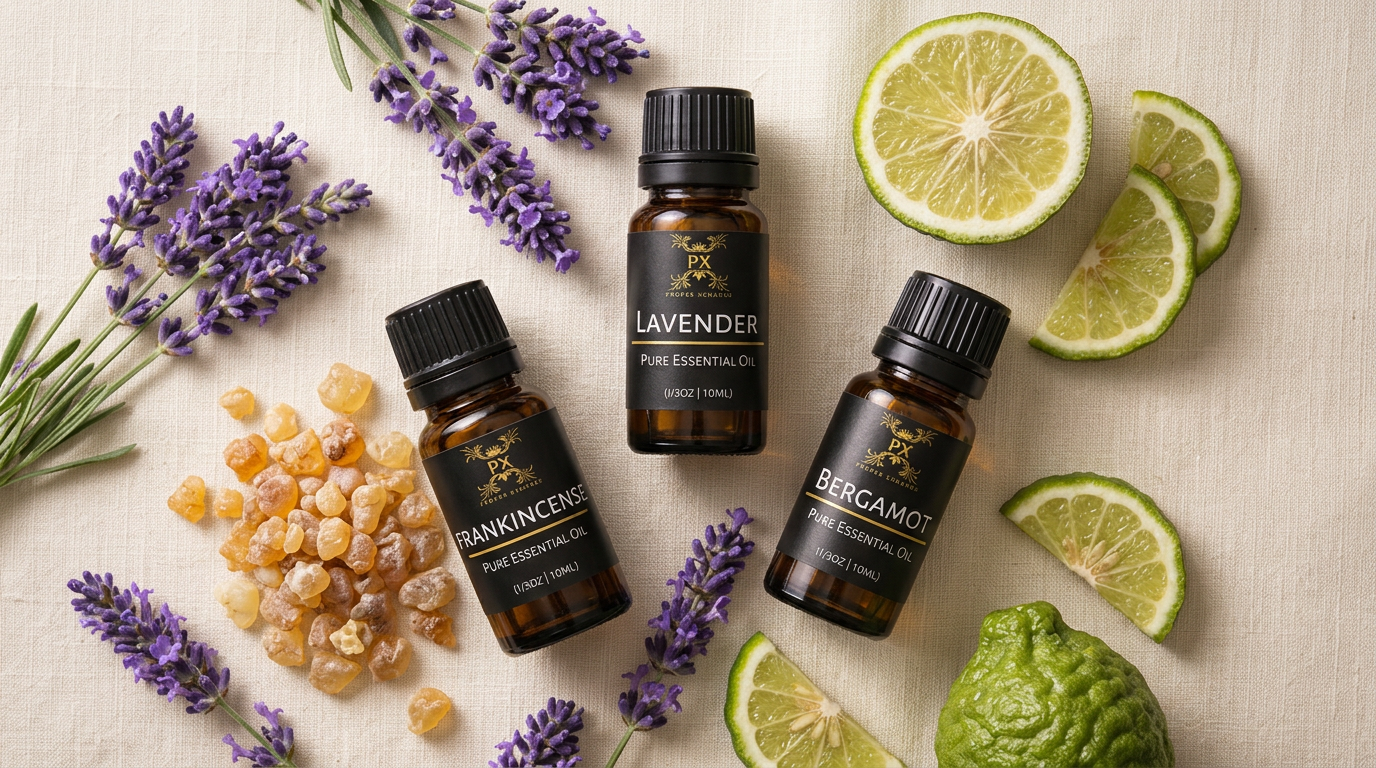
The three essential oils we never travel without
Lavender is a start. Here's what comes next.
When people ask us where to start with aromatherapy, we always say lavender. It's affordable, well-researched, and gentle enough for almost everyone. But lavender is the doorway, not the room. After fifteen years of clinical aromatherapy practice — and three years bringing oils into correctional settings — these are the three we never pack without. Every blend we send into facilities is formulated by our nonprofit's aromatherapy partner, Proper Xchange, so the bottles you see here are the exact bottles in our kits.
01. Lavender (Lavandula angustifolia)
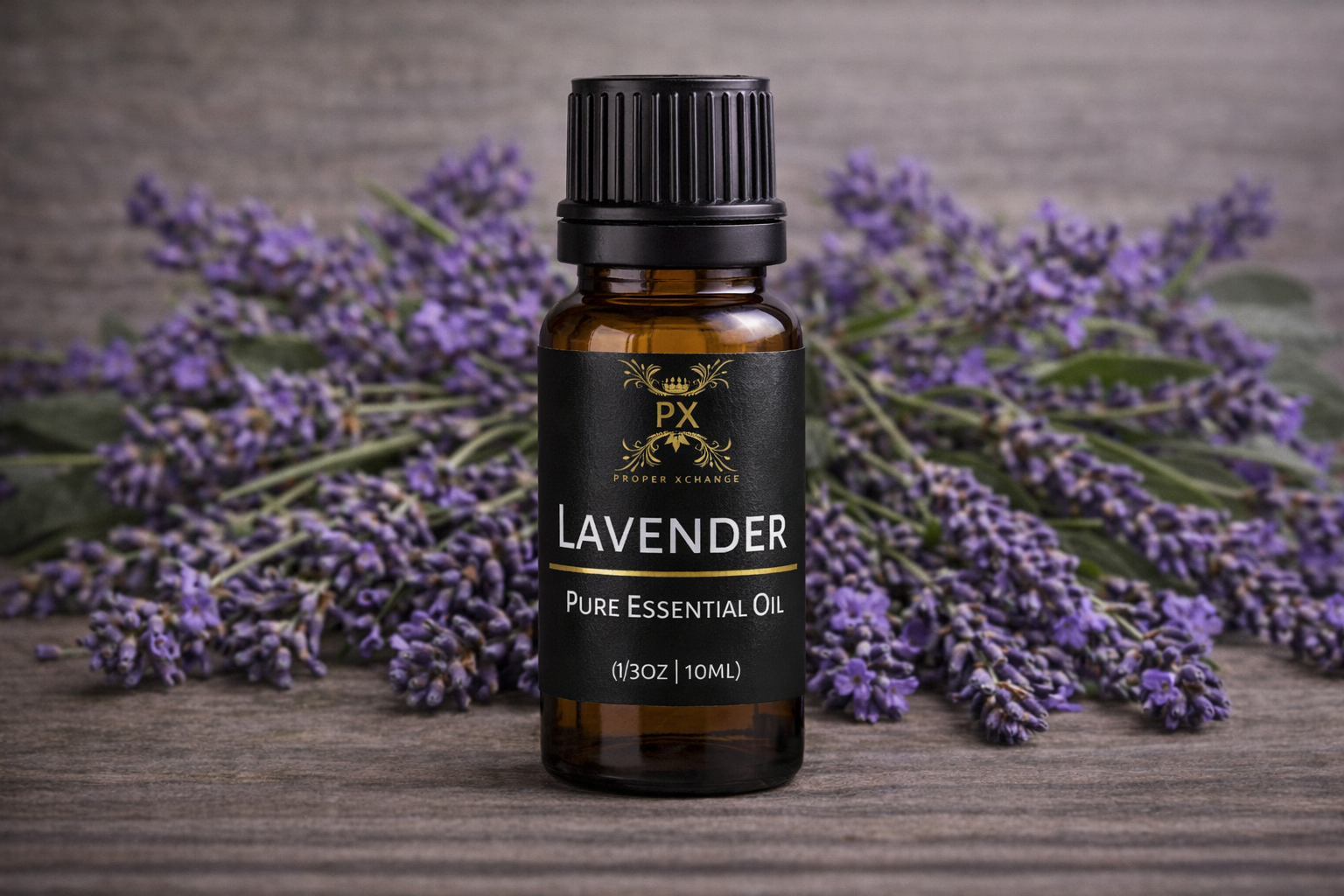
Yes, lavender. Specifically the angustifolia variety, not lavandin or spike lavender, which have different chemistry and different effects. True lavender is one of the most studied essential oils in the world. The research consistently supports its use for anxiety reduction, sleep onset, and mild pain relief. It is safe, when properly diluted, for most adult skin — which makes it the workhorse of any kit.
We use lavender at the start of every facility session, applied to a cotton wick and passed around the room. It's the first scent — the introduction. It's also the oil we send home with residents most often, because it's the one their bodies will already know.
02. Frankincense (Boswellia carterii)
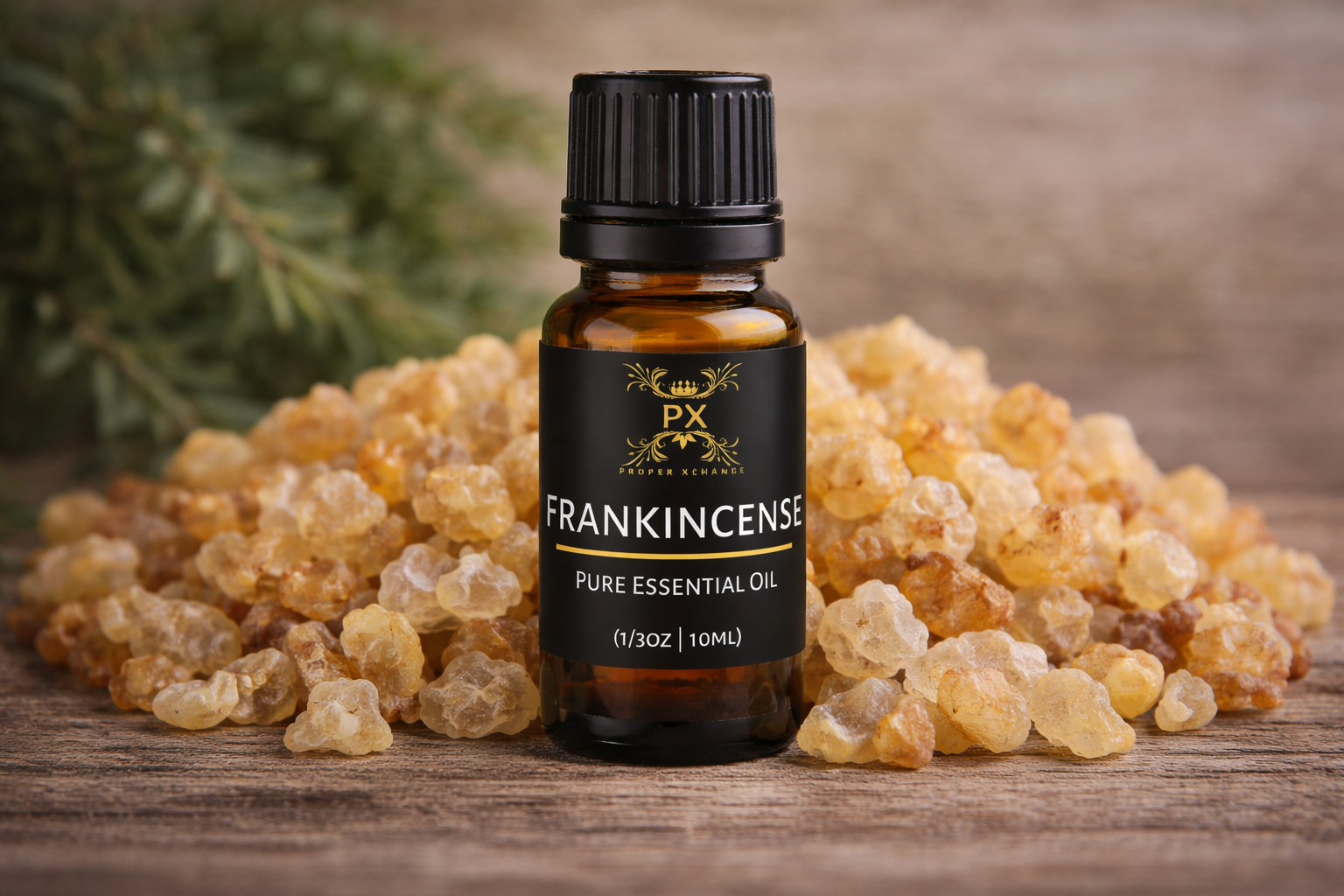
Frankincense is what we reach for when lavender is too soft. Where lavender invites the nervous system to relax, frankincense invites it to deepen. The chemistry is rich in alpha-pinene and limonene, both of which have well-documented anti-inflammatory and mood-supporting properties. The scent is dry, resinous, grounding — closer to the smell of a quiet room than a flower garden.
We use frankincense in our grief work, our reentry programs, and any session where people are doing the harder emotional work. It supports presence without sedation. It does not make you sleepy. It makes you stay.
03. Bergamot (Citrus bergamia)
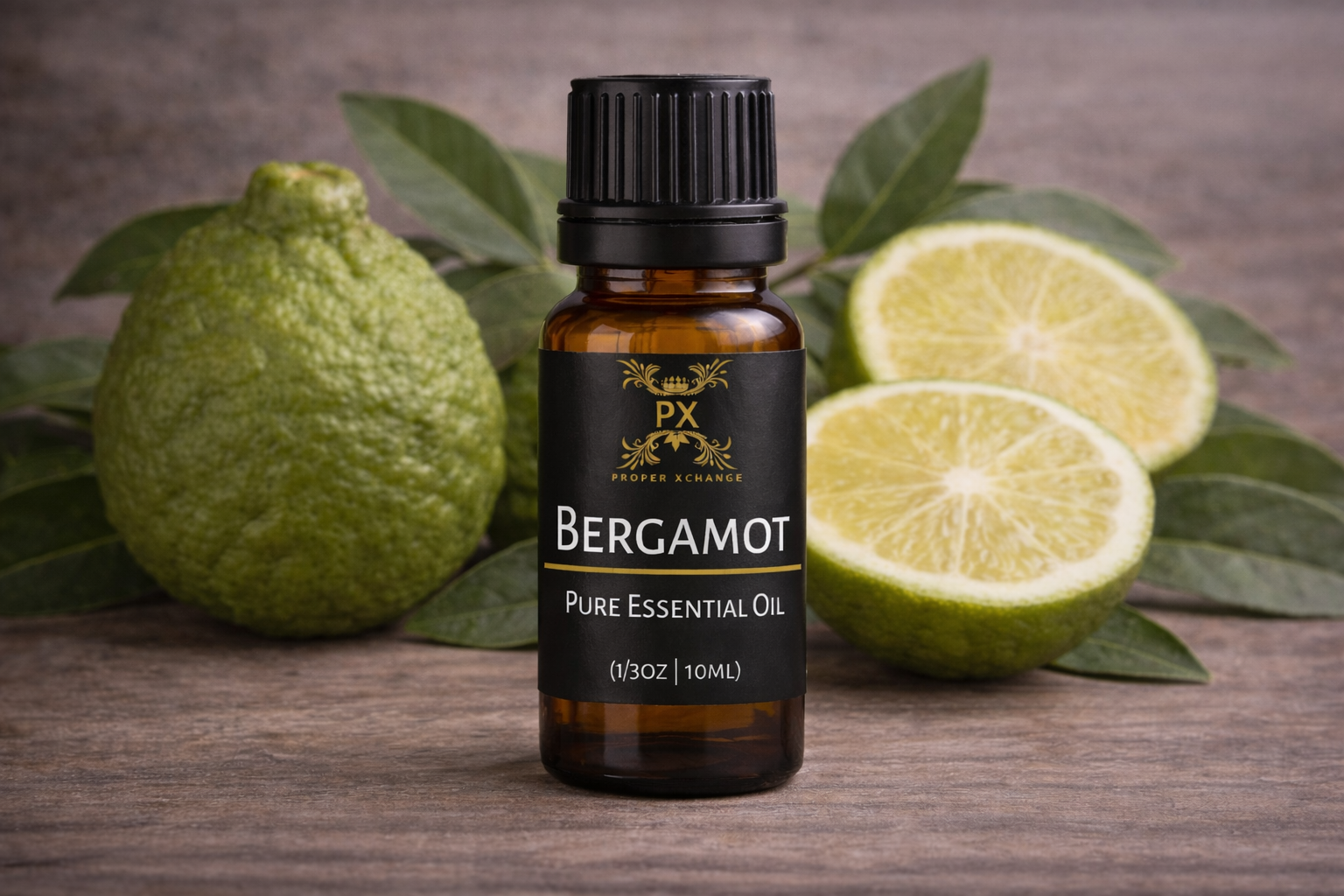
Bergamot is the surprise of the kit. It is a citrus oil — bright, sweet, slightly floral — but unlike most citrus oils, it is sedating rather than energizing. The combination is unusual: it lifts mood while lowering arousal, which is exactly what you want for someone who is depressed and anxious at the same time (which describes a great many of the people we work with). The bottle we carry is the bergaptene-free (FCF) version from Proper Xchange, which removes the photosensitizing compound so it's safer on skin.
Even with the FCF version, we use bergamot primarily in diffusion or in roller bottles applied to the chest and wrists. We save the face and arms for the oils that ask less of the sun.
How to start
If you're new to oils, buy small bottles from a reputable supplier — one that publishes batch information and uses pure, therapeutic-grade material. Avoid 'fragrance oils,' which are synthetic and don't have the same therapeutic properties. Dilute essential oils in a carrier (jojoba, fractionated coconut, sweet almond) at 2–3% for adult skin application. And give yourself permission to experiment slowly. The right oil for you is the one your body relaxes into.
Reaching Beyond Bars does not sell products directly. The three bottles pictured here are sourced through Proper Xchange, the for-profit aromatherapy company founded by the same practitioner who leads our nonprofit programs. Purchases at Proper Xchange support her business; donations to Reaching Beyond Bars fund the kits we send inside.
Keep reading
All articles →
What we learn when we bring sound into a place built for noise.
Three years into our facility programs, here's what we've witnessed about resonance, regulation, and what calm actually does to a room.
528Hz and the body: a layperson's guide
Why this frequency keeps showing up in our work.

Breath practices that work inside a cell
Adapted breathwork for tight, loud, fluorescent environments.