

Breath practices that work inside a cell
Adapted breathwork for tight, loud, fluorescent environments.
Most breathwork instruction was designed for studios. Quiet rooms. Cushions. Soft lighting. A teacher's voice. The instructions assume you have privacy, time, and the kind of nervous system that can close its eyes in a space without feeling exposed. None of those conditions are reliably available in a cell, a dorm, or a holding tank.
Over three years of working in facilities, we've adapted a small set of breath practices that work in tight, loud, fluorescent environments — practices residents have told us they actually use. None of them require closing your eyes. None require silence. None take more than two minutes. Here are the four we teach most often.
01. The 4-7-8, modified
The classic 4-7-8 — inhale four counts, hold seven, exhale eight — works beautifully in a yoga studio. In a cell, the seven-count hold is often too long for someone already in fight-or-flight; it triggers more anxiety, not less. We teach a 4-6-6 instead: inhale four, hold six, exhale six. Same parasympathetic effect, less air hunger. Three rounds is usually enough to shift the nervous system.
02. Box breath, eyes open
Inhale four, hold four, exhale four, hold four. Repeat. The military uses this. Police academies use this. It works because the rhythm is short enough to remember under stress and long enough to engage the vagus nerve. We teach it with eyes open, focused softly on a fixed point — a corner of the ceiling, a brick in the wall. Closing your eyes in custody is a vulnerability most people are not willing to perform around others. The eyes-open version is just as effective.
03. Physiological sigh
This is the fastest nervous-system reset we know. Two short inhales through the nose (the second filling the lungs to capacity), followed by one long slow exhale through the mouth. Repeat one to three times. Dr. Andrew Huberman's lab has documented this technique extensively; in our experience it works in under thirty seconds. It is the practice we teach first to residents in acute distress — before a parole hearing, before a difficult phone call, after a cell extraction.
04. Counted exhale
When everything else feels like too much, we teach this: breathe normally, but count your exhales from one to ten. When you get to ten, start over. When you lose count — and you will — start over from one without judgment. That's it. The simplicity is the point. It's the practice that survives in the loudest, most chaotic moments, because it asks nothing of you except to come back.
A note about where you breathe
We always remind residents: you don't need a special place to breathe. You don't need privacy. You don't need permission. The breath is the one piece of your nervous system that is always with you, and the one piece of regulation no one can take away. Build the practice now, in whatever room you're in, and it will travel with you wherever you go next.
Keep reading
All articles →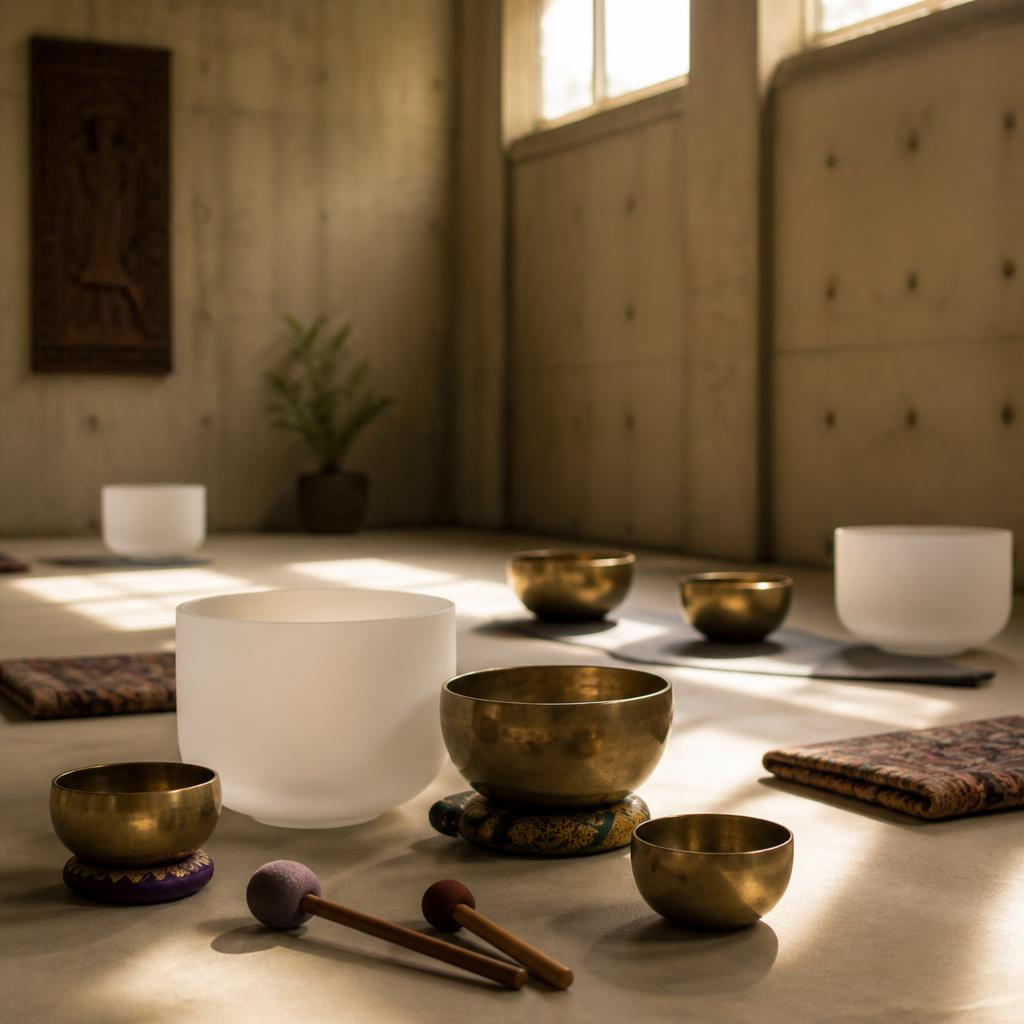
What we learn when we bring sound into a place built for noise.
Three years into our facility programs, here's what we've witnessed about resonance, regulation, and what calm actually does to a room.

528Hz and the body: a layperson's guide
Why this frequency keeps showing up in our work.

The three essential oils we never travel without
Lavender is a start. Here's what comes next.